
Layer Man 3D: Run & Collect
CASUAL AZUR GAMESArcade
4.3607.00 Reviews
- Version
- 2.4.1.0
- Installs
- 10.00M
- Age Rating
- Everyone
Screenshots






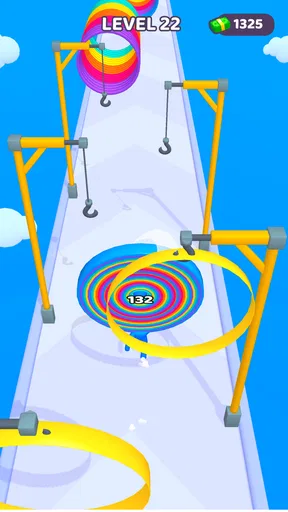

Our Review of Layer Man 3D: Run & Collect
 Analysis by Appyee
Layer Man 3D: Run & Collect is the kind of arcade game I can understand immediately: move through a short running course, gather pieces, and try to finish with a larger, more impressive slinky character. I spent time with it expecting a quick distraction rather than a game I would keep installed for months, and that expectation shaped my experience. It is easy to start, simple enough for almost anyone to understand, and satisfying in brief sessions, but its long-term value depends heavily on whether you enjoy repeating a familiar action loop.
Developed by CASUAL AZUR GAMES, this free game is aimed at a broad audience. It is rated Everyone, runs on Android devices using version 7.0 or later, and sits in the arcade category rather than trying to be a deep action or strategy title. Its current version is 2.4.1.0, and the game has already passed over ten million installs with an average rating of 4.3 from around nineteen thousand ratings. Those figures suggest that its straightforward format has found a large audience, although popularity alone does not guarantee that it will remain interesting after the first few sessions.
What makes the first week so appealing
The opening appeal is immediate. I do not need to learn a complicated control scheme, study a tutorial, or remember a large set of rules before playing. The central goal is visible from the start: collect layers while running and finish with enough size to overcome the giant at the end. That clear visual objective gives every short attempt a sense of direction, even when I am only playing for a minute or two.
The best part of the early experience is the feeling of physical growth. Each collected layer changes the appearance of the character, so progress is not hidden behind a menu or a number. I can see whether a run is going well while I am still moving. That makes the game particularly suitable for quick breaks, such as waiting for a bus, taking a short pause between tasks, or relaxing before bed without committing to a long campaign.
I also like how little mental preparation it demands. Many arcade games try to keep attention through speed, complicated obstacles, or constant visual noise. This one works more like a compact reflex exercise. I look ahead, choose a path, collect what seems useful, and try to arrive at the finish in better shape than when I started. The simplicity is not a weakness during the first few days; it is exactly why the game is easy to pick up.
There is a small but important tactical choice in each run. Collecting everything in sight is not always the same as making the best route. A slightly less obvious line can be preferable if it keeps the character positioned for the next group of layers or avoids a damaging mistake. I found that this gave the early levels more texture than the store summary suggests. The game does not require deep planning, but it rewards paying attention instead of moving randomly.
For younger players, the Everyone rating and uncomplicated objective make the game approachable. For adults, its strongest use is as a low-pressure time filler. I would not recommend it to someone looking for a story, a rich upgrade system, or a competitive arcade challenge with many layers of mastery. I would recommend trying it if the pleasure of collecting visible objects and watching a character grow is enough to keep you engaged.
How to get more from each short run
My most useful early tip is to stop treating every layer as equally important. The instinct is to steer toward the nearest collectible, but a rushed correction can put the character in a worse position for the next section. I had better results when I looked one step beyond the immediate pickup and kept a smoother line. That approach makes the game feel less like frantic swiping and more like choosing a route through a moving lane.
Another practical habit is to use the first part of a run as a calibration period. Instead of trying to maximize everything immediately, I pay attention to how much movement is needed to shift the character and how quickly the course changes direction. Once that rhythm feels familiar, I make fewer panic movements near the finish. This is especially helpful on a small phone screen, where an overcorrection can be harder to notice until it is too late.
The final stretch deserves more attention than it first appears to. Because the end goal is tied to the size collected during the run, a careless move near the finish can spoil an otherwise strong attempt. I now treat the last section as a separate phase: secure the route, avoid unnecessary risks, and focus on arriving with what I have already earned. That simple change made my sessions more consistent without making the game feel difficult.
Whether the loop survives beyond the first month
After the novelty of seeing the character grow wears off, the main question becomes whether the running and collecting loop still feels rewarding. In my experience, it remains pleasant when I want a short, uncomplicated arcade session, but it does not transform into a deeper game with continued play. The appeal is based on repetition with small variations, not on discovering a new system or developing a long-term strategy.
That makes the game’s recurring value very personal. If you enjoy repeating a familiar challenge while trying to make cleaner choices, you may keep returning to it naturally. I can imagine opening it several times during a busy day because there is no heavy commitment. A quick attempt can fit between messages, chores, or a television episode. The game does not ask me to remember a complex objective, so returning after a few days feels effortless.
On the other hand, players who need constant novelty may reach the limit quickly. Once the basic relationship between collecting layers and defeating the giant is fully understood, the satisfaction comes mainly from execution. If the courses begin to feel predictable to you, there is no reason to force a habit. A more substantial arcade alternative would be a better choice for someone who wants evolving challenges, deeper progression, or a strong reason to return every day.
The free entry point helps with this decision. I can install it and discover whether the loop suits me without paying first. There are in-app purchases ranging from $0.49 to $3.99 per item, so I would approach optional spending carefully and decide whether it genuinely improves my enjoyment rather than buying automatically. The sensible long-term test is simple: play without spending, notice whether the basic runs remain enjoyable, and only consider an optional purchase if the game has already earned regular attention.
For a realistic everyday scenario, I would place this game in the same category as a short video or a casual puzzle played during a five-minute break. I would not choose it for a long journey if I wanted a full gaming session, because the repeated structure could become tiring. I would choose it when I want something visually active but mentally light, especially when I do not want to restart a complicated story or wait through lengthy loading and setup.
What changes the value from player to player
Screen size and playing style matter more here than they might in a slower arcade game. On a compact phone, I prefer deliberate movements and avoid trying to make several corrections at once. On a larger display, the path is easier to read, but the basic issue remains: smooth steering is more useful than constant last-second movement. This is one reason I see the game as better for calm, focused bursts than for distracted multitasking.
It is also worth deciding what kind of progress you personally need. Some players are satisfied by improving a run and seeing a larger character reach the finish. Others want persistent upgrades, unlockable collections, missions, or a clear long-term target. This game’s strongest motivation is immediate and visual. If that is enough, it can stay enjoyable. If you need a more structured progression path, you may find yourself returning less often once the initial surprise disappears.
The game is not the right choice for someone seeking a demanding reflex test. Its accessible design is a benefit for casual players, but it can feel too gentle for arcade fans who want punishing precision or intense competition. Likewise, it will not replace a narrative game for anyone who plays mainly for characters and story. I would describe it as a focused snack rather than a complete meal: useful in the right moment, but not a universal substitute for other genres.
Maintenance, friction, and reasons fatigue can appear
The maintenance burden is low in the practical sense. There is no complicated routine I need to manage, no large inventory to organize, and no long-term strategy that collapses if I stop playing. I can leave it for a week and return without feeling lost. That is a genuine strength for a casual game, because many mobile titles create pressure through daily obligations. Here, the basic activity is easy to resume.
Low maintenance does not mean unlimited freshness. The same simplicity that makes the game convenient can also create fatigue. Running, collecting, growing, and reaching the giant form a clear cycle, but the cycle can become familiar quickly. I noticed that my attention dropped when I played several attempts in a row without a specific personal goal. Setting a small target, such as choosing a cleaner route or finishing without rushed corrections, helped for a while, but it did not turn the game into something fundamentally different.
Another source of friction is the gap between visual progress and meaningful progression. Watching the character gain layers is satisfying in the moment, yet it does not necessarily create a lasting sense of development. Players who expect every successful run to open a new strategic possibility may feel that the reward is mostly cosmetic or immediate. That is not a flaw for a deliberately simple arcade game, but it is an important limitation when deciding whether to keep it installed.
I also found that the game works best when I accept its intended scale. Trying to use it as a main game makes its repetition more obvious. Treating it as a compact activity makes the same design feel more appropriate. My recommendation is to keep sessions short and stop after the loop stops feeling satisfying. Because the game is free, there is little reason to turn it into a chore just to justify having it on the phone.
For parents considering it for a child, the approachable objective and Everyone rating are reassuring starting points, but I would still pay attention to how optional purchases are handled on the device. The available items are inexpensive individually, yet repeated small purchases can add up. For my own use, I would leave spending out of the routine until I knew the game had lasting value. The free version is the proper way to judge that.
How it compares with other casual arcade choices
Compared with endless runners, this game places more emphasis on collecting and visible growth than on surviving for the longest possible time. That makes it easier to understand, but it may offer less excitement to players who enjoy chasing distance records or mastering rapid obstacle patterns. Compared with puzzle arcade games, it demands more moment-to-moment steering and less abstract problem solving. The right alternative depends on what kind of short-session satisfaction you want.
Its advantage over more elaborate mobile games is convenience. I can start playing without learning a large ruleset, and a failed run does not feel like losing a major investment of time. Its disadvantage is that the same convenience limits the depth available to long-term players. I would keep it alongside a more substantial game rather than expecting it to replace one.
The developer’s choice to keep the concept so direct is both the reason for its broad appeal and the reason some players will move on. CASUAL AZUR GAMES has made a game that communicates its goal through play rather than explanation. That is effective for discovery and casual use. It is less effective for anyone who wants a layered system that reveals new possibilities over many weeks.
My long-term verdict after the novelty fades
Layer Man 3D: Run & Collect earns a place on my phone when I want a free, accessible arcade distraction with a clear visual reward. I like that I can understand a run immediately, make small routing decisions, and stop without managing a complicated progression system. The game is especially well suited to short breaks and to players who enjoy collecting objects while watching a character become larger and more capable within a single attempt.
Its lasting value is more limited. I would not install it expecting a deep campaign, a rich mastery curve, or an experience that continually reinvents itself. The first week is likely to be the strongest period for many players because the central growth mechanic is immediately satisfying. After that, continued enjoyment depends on whether repeating the same compact challenge remains relaxing rather than repetitive.
My practical advice is to try it free, play in brief sessions, and judge it by how often you return without forcing yourself. If you naturally open it during spare moments and still care about improving your route, it has done exactly what a casual arcade game should do. If the collecting loop feels stale after a few days, uninstalling it is reasonable; another arcade title with deeper variation will serve you better.
Overall, I see it as a polished quick-play option rather than a permanent mainstay. It does not need to become a daily habit to be worthwhile. For the right player, its low commitment and instantly readable goal are enough to justify keeping it available. For me, it earns occasional space, not unlimited attention—and that is an honest result for a game built around short bursts of simple fun.
Verdict
Strengths of Layer Man 3D: Run & Collect
- Simple one-touch controls are easy to learn.
- Bright 3D visuals make the game appealing to younger players.
- Short levels suit quick gaming sessions.
- Collecting layers gives each run a clear objective.
- The game works well for casual, pick-up-and-play moments.
Limitations of Layer Man 3D: Run & Collect
- Gameplay can become repetitive after several runs.
- Ads may interrupt the experience between levels.
- Progression offers limited depth for experienced players.
- Precise movement can feel inconsistent on some devices.
- The game may require patience when replaying difficult sections.
Other Releases by CASUAL AZUR GAMES
View All
Worms Zone .io - Hungry Snake
Action4.3

Stack Ball - Crash Platforms
Arcade4.5

STAR: Super Tricky Amazing Run
Arcade4.2

State.io — Conquer the World
Strategy4.1
Similar Picks in This Category
View All
Subway Surfers
SYBO Games4.6

Stickman Party 234 MiniGames
PlayMax Game Studio4.6

Subway Princess Runner
Ivy4.4

Temple Run
Imangi Studios4.2

Zombie Tsunami
Mobigame SAS4.6
Stack Ball - Crash Platforms
CASUAL AZUR GAMES4.5
Frequently Asked Questions
What is Layer Man 3D: Run & Collect about?
Layer Man 3D: Run & Collect is a casual arcade game built around running, collecting, and growing your character during short obstacle-course levels. As you move forward, you gather items that increase your size or abilities while avoiding hazards and making choices along the route. The controls are generally simple, making it suitable for quick sessions, although the challenge can increase as stages become more demanding.
How do you play Layer Man 3D: Run & Collect?
Gameplay is designed to be easy to understand, with the character moving along a track while you guide them through swiping or tapping controls, depending on the device version. Your main objectives are to collect useful objects, avoid obstacles, pass through advantageous gates, and reach the finish line in the best condition possible. Timing and choosing the correct path become increasingly important in later levels.
Is Layer Man 3D: Run & Collect free to download and play?
The game is generally available as a free download, allowing players to start playing without an upfront purchase. However, free mobile games commonly include advertising, optional in-app purchases, or both. Ads may appear between levels or after certain actions, while purchases can sometimes provide bonuses or remove advertising. Check the store listing on your Android or iOS device for the current pricing and purchase details.
Does Layer Man 3D: Run & Collect require an internet connection?
The core running levels may be playable without a constant internet connection, which makes the game convenient for short offline sessions. Nevertheless, an internet connection can still be required for advertisements, in-app purchase verification, updates, rewards, or other online features. Availability may also differ between versions, so it is best to test the game in airplane mode after installation rather than assuming every feature works offline.
Is Layer Man 3D: Run & Collect suitable for children?
Layer Man 3D: Run & Collect uses simple controls and colorful 3D visuals, so its basic gameplay can be approachable for younger players. Parents should still review the age rating, advertising behavior, and available in-app purchases before allowing unsupervised play. Depending on the version, advertisements or optional purchases may be present, making parental controls and purchase restrictions useful for family devices.
Play our best games!


